Showing posts with label Vegetables. Show all posts

Thursday, October 7, 2010

Bangladesh: Agriculture sector to get 20 pc subsidy

Country's agriculture sector would enjoy 20 percent subsidy for exporting agriculture products including vegetables, fruits and processed items in order to boost and diversify the exports.

These facilities were mentioned in a recent circular of the Bangladesh Bank as the government decided to continue its support to country's export-led industries during the current fiscal year (2010-2011) by providing subsidies and cash incentives at different rates.

The shipments of some products from July 1 this year to June 30 next year would enjoy subsidies and cash incentives at different rates.

Exports of potato, would enjoy 10 percent cash incentives.

Source: nation.ittefaq.com

Sunday, October 3, 2010

Food for Fort: Cabbage stew, butter-free cake and organic dairy farming

How to replicate a favourite vegetarian dish, butter substitutes in baking and animal welfare in the organic dairy industry


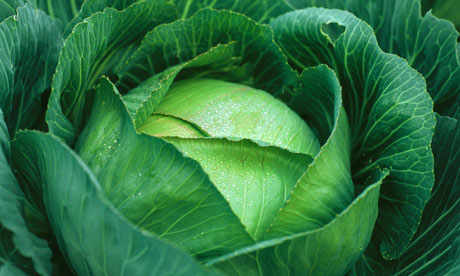
 Head start: Cabbage makes a brilliant vegetarian stew. Photograph: Getty Images/PhotoAlto

There used to be a great vegetarian restaurant in Newcastle called Supernatural, and my favourite dish there was a tomatoey cabbage stew (spring or savoy, I think)topped with potato and cheese. Any idea how I could replicate it?
 
I can't find a recipe, but there's a lovely Bulgarian/Serbo-Croat dish for baked white cabbage that comes pretty close. It's from the splendid The Melting Pot: Balkan Food And Cookery, by Maria Kaneva-Johnson. It doesn't use potatoes, but there's nothing to stop you adding them. You need: 1 tbsp vegetable oil; 600g white cabbage, leaves shredded and core finely chopped; salt and pepper; 135g peeled, chopped tomatoes; 1 tsp paprika; 2-3 ripe tomatoes, sliced. Heat oil in a large frying pan with a lid. Add cabbage, season with salt, cover and cook for 10 minutes, stirring occasionally, until limp. Add 2-3 tbsp water, cover, cook for 15 minutes, mix in chopped tomatoes (and potatoes); season with paprika, salt and pepper. Heat oven to 180C/350F/gas mark 4. Transfer stew to a casserole, top with sliced tomato, season and dribble oil on top. Bake for 40-45 minutes, until cabbage and tomato are charred at the edges. Slap cheese on top for last five minutes. It's as tasty cold as hot.

Several friends are going "butter-free" but I'm finding a reliable alternative hard to come by. Oil is used in carrot cakes, so can I use that?
 
Quite why anyone would want to live in a butter-free universe is beyond me, unless you're lactose-intolerant. In my view, none of the substitutes comes close – just eat less butter, if you're worried – but you can use margarine instead, as a look at almost any recipe from the second world war will tell you. You could use any fat, in fact: in southern Italy, pig fat is common in cakes and breads, while here beef dripping was once widely used. If you're set on using oil – olive or vegetable – there are many recipes out there. If you want to be reallyHarold McGee says, "The moistening and tenderising effects of fat – but not its aerating abilities – can be imitated by some concentrated fruit purées, notably prune, apple, apricot and pear." The result will be a moist, but heavyweight cake. health-conscious, don't use fat at all. The seer

My concern for animal welfare led me to stop eating meat, and as mainstream dairy farming involves many, to me, unacceptable practices, I think I ought to become a vegan – but don't want to. Can I be sure animals that produce organic dairy foods are not factory-farmed, and what happens to male calves?
 
A cow has to be pregnant to produce milk, and a good proportion of calves will be male. Female calves will go on to become the next generation of milk–producers, but the beef industry can make use of only a certain number of males for beef. It is hard to get precise figures, but somewhere between 150,000 and 250,000 male calves are shot at birth each year because we have no use for them. The organic sector is not much different from "conventional" farming in this regard, although the Soil Association is committed to ending the practice within five years. That said, welfare and husbandry standards of most agencies licensed to certify food as organic ensure that the treatment of dairy cattle is far removed from that in factory farming systems, although it's still well short of what some animal welfare organisations demand.

Got a culinary query for Matthew? Email food.for.fort@guardian.co.uk


Wednesday, August 25, 2010

Floods cause Rs 244.6bn loss to agri sector: MinFA

* Small farmers suffer loss of Rs 98bn, while some face total annihilation of their crops
ISLAMABAD: The devastating floods across the country have caused damage worth Rs 244.6 billion to the agriculture sector with maximum losses suffered by the small farmers of around Rs 98 billion, while some facing total annihilation of their crops.

This was revealed in the initial estimate prepared by the Ministry of Food and Agriculture (MinFA) on Monday in coordination with the provincial governments and Azad Jammu and Kashmir (AJ&K) government. However, the estimate prepared by the MinFA has also said that the agriculture loss could be higher in Southern Punjab and some parts of Sindh as clear pictures from many areas have yet not been received. The ministry has said that maximum damage by the floods has been made to the minor crops of Kharif season, which includes jawar, maize, moong and mash pulses and some citrus fruit varieties. “The most upsetting thing is that the minor crops are mainly cultivated by small farmers and in areas where growers have small land holdings,” said a senior official of the MinFA. “This loss is the most serious setback for the farming community because most of the small farmers have lost considerable number of livestock too as they had limited facility for their animals.” Among the major cash crops the ministry’s report highlighted that the largest loss of Rs 71.4 billion has been faced by the cotton crop.

Cotton was sown over 3.1 hectares in the current Kharif season out of which the floods have destroyed crops at 0.51 million hectares, as a result the production is expected to decline by almost 15 percent to 11.7 million bales as against the targeted cotton production of 14 million bales in 2010.

The Minister for Food and Agriculture Nazar Muhammad Gondal has said that Pakistan will face serious cotton shortage in coming days as more than 15 percent of the crop has already been hit by the floods.

“Two million bales have been destroyed in the floods in Punjab alone and we have yet to receive the complete details,” the minister added. The cotton crop has been seriously damaged in Bakkhar, Layyah and Mianwali districts apart from many other areas in southern districts of Punjab, while the left bank of River Indus in Sindh is the cotton belt and the cotton crops have suffered in Sukkur, Khairpur, Ghotki, Naushero Feroze and Benazirabad districts. The paddy crops in the country have faced a loss of Rs 56.3 billion and the worst hit areas are right bank districts of Sindh.

The countrywide paddy production is expected to decline by around 27 percent to 4.35 million tonnes as against the original estimated production of 5.95 million tonnes. Among the major crops, sugarcane farmers have suffered a loss of Rs 19.3 billion and its production is expected to decline to 47.23 million tonnes as against the estimated production of 54.83 million tonnes.

Pakistan Sugar Mills Association (PSMA) Chairman Iskander khan said that the initial reports suggest that the sugar cane crops in Charsadda, DI Khan and some parts of Southern Punjab have suffered damages. He said that 4 million tonnes of sugar production was expected in the coming season but now 3.8 million tonnes is likely to be obtained. The MinFA has estimated that the other serious issue faced by the country in the near future would be shortage of vegetables.[DailyTimes]