Showing posts with label Commodity. Show all posts

Monday, October 11, 2010

Commodities Advance to Two-Year High Led by Agriculture Futures

By Tony C. Dreibus
Oct. 11 (Bloomberg) -- Commodities rose to the highest in two years, led by agriculture futures, after a U.S. Department of Agriculture report last week showed corn production in the country would decline more than expected by analysts.

The Standard & Poor’s GSCI Index of 24 raw materials rose as much as 1.3 percent to 571.4810, the highest level since Oct. 3, 2008. The UBS Bloomberg Constant Maturity Commodity Index climbed to 1,490.731, the highest since Aug. 27, 2008. Corn futures gained as much as 8.5 percent and soybeans jumped to a 16-month high.

U.S. corn production will total 12.664 billion bushels, the U.S. Department of Agriculture said Oct. 8. That’s below the average estimate of 26 analysts surveyed by Bloomberg News for 12.977 billion bushels. Yields will be 155.8 bushels an acre, the USDA said, compared with analysts’ forecast of 160.2 bushels an acre.

“Friday’s news has been exceptionally bullish for the markets,” said Sudakshina Unnikrishnan, an agricultural commodities analyst for Barclays Capital in London. “If one looks at current prices, I don’t think we’re close to peaks. There is still further upside from the current levels.”

Corn futures for December delivery surged 42.75 cents, or 8.1 percent, to $5.71 a bushel at 10:34 a.m. London time on the Chicago Board of Trade. The price has gained 23 percent since Oct. 1.

Barclays forecast the grain’s fourth-quarter average price at $5.24 a bushel before the report, Unnikrishnan said. The first quarter average was expected to be about $5.40 a bushel.
‘See a Scramble’

Soybeans for November delivery rose 43.5 cents, or 3.8 percent, to $11.785 a bushel in Chicago. The price has jumped 7 percent this month. Wheat futures for December delivery gained 8 cents, or 1.1 percent, to $7.2725 a bushel.

With corn prices rising, more growers will plant the grain instead of soybeans and wheat, Unnikrishnan said.

“The fact that corn prices are looking more attractive, we could see a scramble for acres tilting in favor of corn,” Unnikrishnan said. “We see soybean prices needing to push up in terms of planting. In feed substitution with wheat, prices need to push up.”

Sugar for March delivery gained 0.88 cent, or 3.3 percent, to 27.2 cents a pound on ICE Futures U.S. in New York. The price earlier touched 27.24 cents a pound, the highest in almost eight months, on speculation that crops in Brazil, the world’s largest supplier of the sweetener, will be harmed by drought that lasted through mid-September.

Silver for immediate delivery jumped as much as 1.6 percent to $23.6325 an ounce, the highest since March 13, 1980. Silver for December delivery gained 0.8 percent, also extending a rally to a 30-year high.

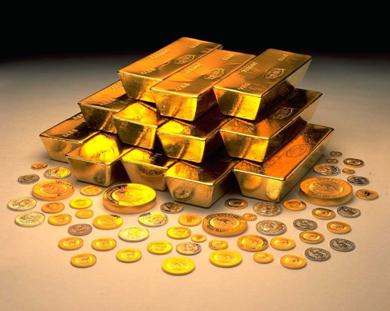
Gold for immediate delivery rose $1.86, or 0.1 percent, to $1,348.60 an ounce. Futures for December delivery climbed $6.70, or 0.5 percent, to $1,347 an ounce. The most-active contract has gained 23 percent this year.

--Editors: John Deane, Dan Weeks.
To contact the reporter on this story: Tony C. Dreibus in Chicago at tdreibus@bloomberg.net.
To contact the editor responsible for this story: Claudia Carpenter at ccarpenter2@bloomberg.net.

Sunday, October 10, 2010

Commodities Soar as Crop Forecasts Cut, U.S. May Buy More Debt

(Bloomberg) -- Commodity prices surged to the highest level in almost two years after the U.S. government cut its crop-supply forecasts and the dollar slumped on speculation the Federal Reserve will buy more debt to revive the economy.
 
The Reuters/Jefferies CRB Index of 19 raw materials jumped as much as 2.7 percent to 295.17, the highest level since Oct. 15, 2008. Every price advanced. Wheat, soybeans and corn led the gains, each jumping the most allowed by the Chicago Board of Trade. Copper climbed to a 27-month high, and crude oil topped $83 a barrel.

Since the end of May, the CRB index has rallied 16 percent, and the dollar slid 11 percent against a basket of six major currencies, as the U.S. sought to inject more cash into the economy and spur growth. Today, the greenback dropped below 82 yen for the first time in 15 years as a U.S. payrolls report showed employers cut more jobs last month than economists forecast.

“Everybody is printing more money except emerging markets, and those guys are buying commodities,” said Michael K. Smith, the president of T&K Futures & Options in Port St. Lucie, Florida. “We’re going to have an inflationary spike. This is a perfect storm for commodities going higher.”

The CRB index rose 7.81 to close at 295.11 at 5:10 p.m. New York time. This week, the gauge gained 3.3 percent, the most since April 2.
Crop Forecasts Cut

The U.S. Department of Agriculture today cut its domestic corn-crop estimate for the second time in as many months, predicting a 3.4 percent drop from last year. While farmers will collect the most soybeans ever, the total will be 2.2 percent less than forecast in September, the agency said. Global wheat inventories will be 1.8 percent less than projected last month.
“The government has shocked the grain industry with the huge cut in U.S. production,” said David Smoldt, the vice president of operations for FCStone LLC in West Des Moines. “There will be some scrambling for supplies today.”

Corn futures for December delivery rose the 30 cents, or 6 percent, to close $5.2825 a bushel. Soybean futures for November delivery soared 70 cents, or 6.6 percent, to $11.35 a bushel. Wheat futures for December delivery jumped 60 cents, or 9.1 percent, to $7.1925 a bushel.
Reduced supplies of corn may increase costs for meat companies and squeeze margins for makers of grain-based ethanol such as Valero Energy Corp., Poet LLC and Archer Daniels Midland Co.

The shares of Tyson Foods Inc., the largest chicken processor, slid $1.26, or 7.7 percent, to $15.01 in New York Stock Exchange composite trading. Earlier, they touched $14.82, an eight-month low. Smithfield Foods Inc., the biggest pork producer, fell $1.08, or 6.7 percent, to $14.97, the biggest drop in a year.
Freeport Climbs

Copper futures for December delivery increased 9.5 cents, or 2.6 percent, to close at $3.7745 a pound. Earlier, the price reached $3.8015, the highest level for a most-active contract since July 8, 2008.

Freeport-McMoRan Copper & Gold Inc., the world’s biggest publicly listed copper producer, climbed $4.11, or 4.5 percent, to $95.51. Earlier, the shares reached $95.91, the highest level since Aug. 1, 2008.

Crude-oil futures for November delivery rose 99 cents, or 1.2 percent, to $82.66 a barrel on the New York Mercantile Exchange. Earlier, the price reached $83.13.

Sugar rose to the highest price in almost eight months on concern that demand will outstrip supplies after adverse weather damaged crops in Brazil, the biggest producer.
Cotton futures jumped to a 15-year high after the USDA boosted a forecast for global demand. Textile mills will use 120.8 million bales in the year that began Aug. 1, up 0.2 percent from last month’s estimate, the USDA said.

--With assistance from Jeff Wilson, Whitney McFerron and Leslie Patton in Chicago: Patrick McKiernan, Steve Stroth
To contact the reporter on the story: Yi Tian in New York at Ytian8@bloomberg.net.
To contact the editor responsible for this story: Steve Stroth at sstroth@bloomberg.net.

Thursday, October 7, 2010

Commodity News Snapshot-Pakistan


KARACHI (October 07, 2010): Sharp recovery was witnessed on the currency market on Wednesday as the rupee maintained its surge mainly because of easy supply of the US currency, dealers said. The rupee was sharply higher by 14 paisa in relation to the greenback for buying and selling at 85.98 and 86.02, they said. In the third Asian trade dollar stayed near eight-month lows on the euro and edged towards a 15-year trough on the yen, hurt by expectations of Federal Reserve easing after Japan lined up its own reflation tools.

Prices remain firm on exporters' buying on cotton market
KARACHI (October 07, 2010): Prices showed firmness on the cotton market on Wednesday as exporters' buying helped the rates to retain the overnight levels, dealers said. The Karachi Cotton Association (KCA) official spot rate was inert at Rs 7,050; they said. In the ready business, nearly 20,000 bales of cotton changed hands between Rs 6,850-7,100; they said.

KARACHI (October 07, 2010): Following the directives of the Economic Coordination Committee (ECC), the Trading Corporation of Pakistan on Wednesday offloaded 24,800 tons imported sugar in open market to stabilise soaring commodity prices. The ECC on September 21, decided to offload 50,000 tons of imported sugar in the open market to overcome sugar crisis, as provinces had completely failed to sell subsidies imported sugar in domestic market at low rates during Ramazan, following which sugar price hit peak level of Rs 82-84 per kg in retail market.

KARACHI (October 07, 2010): The prices of gold and silver on Wednesday struck new highs of Rs 43, 350 per tola and Rs 650 per tola respectively on the local market, traders said. Gold reached the record high mark of Rs 43, 000 per tola a day before on the local market, surpassed to a new rise of Rs 43, 350. Similarly, the price of gold 10-gram exceeded to the highest ever level of Rs 37, 157 from previous high of Rs 36, 857, according to traders.


KARACHI (October 07, 2010): Gold and silver rates in rupees per 10 grams prevailing in major cities on Wednesday (October 06, 2010).


International News

KUALA LUMPUR (October 07, 2010): Palm oil prices hit a near one-week high on Wednesday on expectations of a new round of central bank action to ginger up weakening economies although a record US soy crop dragged on sentiment. Hopes of central banks easing monetary policies weighed on the greenback, as it would make dollar-priced commodities such as Malaysian palm oil and US soyaoil cheaper for big customers like China and India.


LONDON: Gold rose to record highs for a second day in a row on Wednesday as investors punished the dollar ahead of the Federal Reserve’s possible resumption of special measures to protect the flagging economy.

LONDON: Crude oil reached a fresh five-month high after the release of US government figures that showed a large fall in product inventories. Markets responded to this sign of high product demand by pushing up prices, despite simultaneous data showing a higher than expected rise in crude oil stocks.


MILAN (October 07, 2010): European wheat futures jumped on Tuesday on the back of strong gains in US grain futures and other commodities, shrugging off a rally in the euro that could hamper Europe's wheat competitiveness on world markets. Benchmark November on Euronext milling wheat futures closed at 205.75 euros ($283.3) a tonne, up 6.50 euros or 3.26 percent after hitting an intraday high of 206.00 euros. The next resistance level is estimated at 208 euros.


Monday, August 30, 2010

Commodity News Snapshot-Pakistan


Trading in cotton sustained despite fluctuating prices to meet the orders in hand making a balance. The spot rate leap was restricted, which opened unchanged at Rs 6300, in trading process it enhanced by Rs150 at Rs 6450 and week closing was seen at the same level on August 28,2010.


Peak of the monsoon rains and floods is over and monsoon weather is on its last leg. However, after effects of the inclement weather would be there for longer time. Continued humid weather and growth of unwanted weeds, vegetation and grass in the fields may prompt attacks of plant pests and diseases in next month.


The country's import of pulses has witnessed a sharp decline of 22 percent in July 2010, which the importers attributed to soaring global prices, while flood continues to ravage standing crops. "Cost of pulses has posted more or less 50 percent increase globally and subsequently locally," said President Karachi Chamber of Commerce and Industry (KCCI), Abdul Majeed Haji Muhammad

Sunday, August 29, 2010

How does double dip recession affect Gold?

By Julian D.W. Phillips 
Nearly all the commentary we have heard on this question says the same. “Yes, the prospects of a Double-Dip recession have increased but it remains unlikely that it will happen”. We feel that there may be just a hint of self-interest in these answers. The shockwaves that will reverberate should some say it is going to happen, or if the news confirmed that it had started would rattle the markets hugely. Despite the ability to disseminate news instantly, we have to wait a month before reliable figures are published to confirm one way or the other that this is or is not the case. 


On the other hand a recession or depression has become a state of mind too. If consumers believe it is coming, it will come and at the moment that is the mood out there among the consumer. He is saving because he could become a victim if he hasn’t cut debt and save. No doubt the sight of a neighbor being evicted stimulates thrifty habits. And that’s what is coming from consumers now. They aren’t spending. It’s becoming a financial winter out there and we believe consumers minds are bringing on the recession again. Surely that’s bad for gold? 

What is happening in the Global Economy? 
As we now live in a global economy national economic climates heavily impact the global scene and particularly the U.S. national scene. Look from outside in as a foreign investor that doesn’t have to invest there, what would you do? Well China is right there and this is what they’re doing: 

U.S. Treasury data show that China has cut its holdings of Treasury debt by roughly $100 billion over the past year to $844 billion. Discreetly, the main surplus countries, China, Japan, and the U.K. [Mid-East petro-dollars] have been slowing down in the last two years. In August they bought the least amount of U.S. debt this year. 

China is diversifying as it continues to hold down its currency, buying record amounts of Japanese, Korean, Thai, and no doubt Latin American bonds, in place of U.S. Treasuries. It is also ‘limit’ buying gold in quantity through the London bullion banks, buying scrap ores or buying direct from miners such as Coeur d'Alene in Alaska. Excessive Dollar holdings are also going to more hard assets such as strategic reserves of oil and coal, and probably industrial metals. State entities are buying up natural gas reserves in Africa and Central Asia, or oil sands in Canada, or timber in Guyana. 

There are considerably more activities by countries and institutions that are Dollar diversifying that we don’t have enough room to describe here, but it all leads to an expectation of a falling Dollar. The trouble is that so many dependant currencies will try to fall with it to protect their trade relationship [watch the Yen] that the fall will not be easily apparent in exchange rates, but in the falling buying power of the Dollar. When we describe this we are not talking about a change in exchange rates but changes that will bring about structural changes in the current monetary system based on the U.S. Dollar. 

Then what? 
Don’t think for a moment that the U.S. will follow the path of Japan. Deflation is not an option for the consumer driven economy of the U.S. We believe that the path Mr. Bernanke has chosen for the U.S. has to be followed all the way. Today, he stated that he was ready to act to defeat deflation, should it arrive. Quantitative Easing will lead to inflation. Inflation is an acceptable alternative to deflation, because it is easier to cure inflation than deflation. But the government of the U.S. is likely to wait until deflation is biting before they act, then the stimuli will have to be heavy as will consequential inflation. This prospect is bringing tremendous doubts about the value of Dollar and other currencies. 

U.S. monetary authorities will place U.S. interests well ahead of any others, so don’t expect a globally coordinated policy against deflation. It will be every nation for himself. 

The surplus nations will, as they are doing now, follow the defensive measures described above. But it may take weeks before this is accepted. So now is the time to act. 

And Gold? 
The big picture for the long-term could not be better for gold, than it is now. Gold has proved capable of performing well in deflation, in uncertainty, in fear. Internationally it is liquid in all parts of the world. It is internationally acceptable cash. More than that, it is an effective counter to the devaluing of currencies through quantitative easing or currency devaluations. 

Courtesy: www.goldforecaster.com 

Thursday, August 26, 2010

Commodity News Snapshot-Pakistan


ISLAMABAD (August 26, 2010): Sugar price is expected to skyrocket to about Rs 90 per kg in the coming weeks as stocks with sugar mills are inadequate, said a market player on Wednesday. Currently, sugar price in Pakistan is higher than in India, Sri Lanka and Bangladesh but lower than Afghanistan. A ministerial committee, headed by the Minister for Industries and Production, Hazar Khan Bijarani, which met last week, did not reach any agreement on a plan to deal with the rising sugar prices.


KARACHI (August 26, 2010): Three major crops-sugarcane, cotton and rice-have been badly hit by the recent floods as the standing crops on some 1.4 million acres have been badly damaged in Sindh, it is learnt. The field staff of Agriculture Department has submitted a district-wise crop damage report after conducting survey of all 23 districts of the province to find out the agricultural loss to the standing Kharif crops in the province by flash floods, sources told Business Recorder on Wednesday.


KARACHI: The Karachi cotton market witnessed a firm trading session while quality lint remained an issue on the trading floor amid strong physical prices, traders at the Karachi Cotton Association (KCA) said Wednesday.


KARACHI (August 26, 2010): Steady trend was seen on the cotton market on Wednesday as buyers showed no reluctance in new deals on short crop news after historical floods in the country, dealers said. The Karachi Cotton Association (KCA) official spot rate was inert at Rs 6,450, they said. In the ready business nearly 9000 bales of cotton changed hands between Rs 6400-7000, they said.


KARACHI: The dollar lost strength against the rupee in the interbank market, dealers said on Wednesday. The dollar commenced the day’s trading at Rs 85.66 for buying, lost three paisas and closed at 85.63 for buying and Rs 85.68 for selling. The euro regained its strength versus the rupee, as it started the day’s trading at Rs 108.19 for buying, gained 48 paisas and closed at Rs 108.67 for buying and Rs 108.87 for selling. The British currency appreciated against the rupee, as it started the day’s trading at Rs 131.97 for buying, rose 14 paisas and closed at Rs 132.11 for buying and Rs 132.31 for selling.


KARACHI (August 26, 2010): Gold and silver rates in rupees per 10 grams prevailing in major cities on Wednesday (August 25, 2010).


MULTAN (August 26, 2010): Former Federal Minister Alhaj Sikandar Hayat Bosan has said that recent devastating floods across the country have caused damage worth Rs 250 billion to the agriculture sector with maximum losses suffered by the small farmers of around Rs 100 billion, while some facing total annihilation of their crops.


KARACHI (August 26, 2010): The Food Department is not in agreement with the contents of a news item carried by Business Recorder on Wednesday regarding damage of over 0.3 million tonnes of wheat stock by the recent flood and torrential rains. It is categorically stated that after taking into consideration of the monsoon rains and the damage probably caused by it in consequent thereupon.


Precious metals rose for a second day as the dollar fell against the euro and raised concern over economic growth that hit equities, stimulating interest in the metal as a safe haven.


Gold is benefitted from renewed investor demand for safe-haven assets as evidence of a slowing economy mounts, which in turn has dragged global equities to their lowest since early July, when a recovery in risk appetite led prices to retreat from June's record highs.

Wednesday, August 25, 2010

Commodity News Snapshot - Pakistan


ISLAMABAD: Pakistan is likely to receive 77,500 tonnes of white sugar from India and Brazil next week, adding to national stocks of 155,948 tonnes, a spokesman for the Trading Corporation of Pakistan (TCP) said Tuesday. Three vessels will be bringing in 77,500 tonnes of white sugar from the two countries during the next 10 days, spokesman TCP said.

* Small farmers suffer loss of Rs 98bn, while some face total annihilation of their crops

ISLAMABAD: The devastating floods across the country have caused damage worth Rs 244.6 billion to the agriculture sector with maximum losses suffered by the small farmers of around Rs 98 billion, while some facing total annihilation of their crops.

ISLAMABAD: Cotton alone contributes nearly 65 percent of the foreign exchange earnings of Pakistan and the Bt cotton varieties (IR 3701 and IR 1524) developed by Pakistan Atomic Energy Commission’s (PAEC) Biotech Centre, NIBGE hopefully will help in achieving cotton vision 2015 of government. The object is to boost production to 20 million bales by 2015, an official of PAEC said.

Textile sector to spend $1.01bn on import

KARACHI: The government and private sector’s estimates of cotton loss in recent flash flood in Sindh and Punjab reflect a loss of 1.4 million bales, Pakistan Cotton Ginners Association (PCGA) said Tuesday.

KARACHI: The Karachi cotton market observed a firm trading session amid increasing spot rate and better volumes, Karachi Cotton Association (KCA) traders said on Tuesday.

The KCA revised the spot rate upward by Rs 150 per maund to Rs 6,450 per maund on fair demand by the buyers, especially the spinning sector, floor brokers said. KCA senior trader Shakeel Ahmad said, “The prices increased reflecting the rising demand from buyers other than from leading mills and spinners.”


MULTAN (August 25, 2010): Fifteen members of Pakistan Cotton Ginners Association (PCGA)'s central executive committee were elected unopposed for the year 2010-11. According to election commission, total 16 candidates filed their candidature for the 15 vacant seats of executive committee. Of them ex-chairman Haji Muhammad Ibrahim withdrew his candidature.


KARACHI (August 25, 2010): Prices showed upward trend on the cotton market on Tuesday due to pre-Eid purchasing by the mills, dealers said. The Karachi Cotton Association (KCA) official spot rate was raised by Rs 150 to Rs 6,450, they said. In the ready business nearly 16000 bales of cotton changed between Rs 6300-7100, they said.

ISLAMABAD (August 25, 2010): The floods have damaged up to 675,000 tons wheat lying under open sky, Agriculture Ministry officials said. They said that according to initial estimates Pakistan has sustained loss of $20.25 million by the flood. Sources said that the flood had damaged different crops sown on 1.72 million hectares.

KARACHI (August 25, 2010): Mixed price pattern was seen on the local currency market on Tuesday in process of trading, dealers said. On the interbank market the rupee fell by four paisa in relation to dollar for buying at 85.64 and it also slid by three paisa for selling at 85.68, moneychangers said. In the second Asian trade euro hit a nine-year low against yen on Tuesday as the loss of key technical support led speculators to short the currency in the hope of forcing stop-loss sales against both yen and dollar.

KARACHI: Gold slipped by Rs 128 to Rs 33,214 per 10 grams in local bullion market Tuesday, as its international price also declined to $ 1,217.50 an ounce, market sources said.


KARACHI (August 25, 2010): The country's oil imports rose to the highest-ever level of 1.9 million tons in July 2010 as compared to 1.6 million tons in the same month in 2009, showing a growth of 20 percent on year-on-year basis. "The major reason for such high growth in oil import volumes is mounting demand of furnace oil, a major fuel for thermal power generation as its imports grew by 51 percent on yearly basis to 0.7 million tons," analysts said.